Oil and gas at the core, with the UK growth markets alongside.
TAG’s core market is oil and gas, with topside, jacket and subsea work funded now in Norway and West Africa, independent of UK government commitment. Alongside it sit the UK growth markets, nuclear new build, offshore wind, defence, carbon capture and a commercial baseload, four of them carrying confirmed government commitment. The Teesside location, the accreditation portfolio and the load-out capability let TAG bid across all of them.
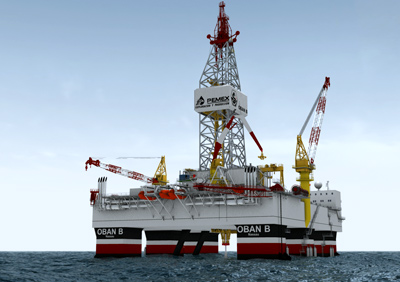
Funded work, moving now in Norway and West Africa.
Oil and gas is the core of TAG’s heritage, and much of the demand does not depend on UK government commitment. Topside modules, offshore and onshore jackets, pipeline supports, deck modifications, manifolds and EPIC subsea project work are funded in Norway and West Africa now. Capacity that is not committed now will not be available when the prime work hits the market.
- Norway. Subsea tie-back and field-redevelopment programmes driving demand for manifolds, templates and seabed structures.
- West Africa. Deepwater and integrated gas developments.
- Scope. Topside modules, offshore and onshore jackets, pipeline supports, deck modifications, manifolds and EPIC subsea project work.
Hinkley, Sizewell and the SMR programme.
The UK civil nuclear programme includes Hinkley Point C (under construction), Sizewell C (committed) and the Great British Nuclear SMR programme. All require structural and specialist steel fabrication capacity. Fit For Nuclear (F4N) accreditation, nuclear-grade welding capabilities and proximity to potential SMR sites position TAG to bid for prime and tier-one packages.
- Hinkley Point C. Active construction, with continuing demand for structural steel and specialist fabrication packages in the tier-one and tier-two supply chain.
- Sizewell C. Committed, with the corresponding fabrication demand profile moving toward award.
- Great British Nuclear SMR programme. Multi-site, with proximity advantages to confirmed and shortlisted locations.
North Sea cluster on the doorstep.
The North East of England sits at the centre of the UK’s offshore wind supply chain. Confirmed and planned developments across the North Sea will drive demand for foundation structures, transition pieces and subsea infrastructure for the next decade. Quay-side fabrication with direct load-out is a structural cost advantage on packages in the upper weight range.
- Foundation structures. Monopiles, jackets and transition pieces — the heritage capability of TAG’s tubular production heritage.
- Substation steelwork. Onshore and offshore substations as the North Sea grid is built out.
- Service and supply. Ancillary structures and project-specific fabrication across operating windfarms.
Teesside and Humberside CCS clusters.
The Teesside and Humberside CCS clusters are geographically proximate and require significant fabrication capacity for capture infrastructure, pipeline supports and processing modules. Emerging hydrogen and decommissioning programmes draw on the same skill base, accreditation stack and load-out capability.
- East Coast Cluster. Designated CCS cluster covering Teesside and Humberside; multi-year fabrication demand in capture and pipeline infrastructure.
- Hydrogen. Emerging programme with overlapping accreditation and welding-procedure requirements.
- Decommissioning. North Sea decommissioning workload using the same load-out capability in reverse.
Multi-year departmental commitments.
Sustained increases in UK defence spending have created multi-year demand in the higher-priority sub-sectors of the defence supply chain. The accreditation portfolio and Teesside footprint allow TAG to bid into the relevant prime contractors as they move heavy fabrication into the region.
- Naval and maritime infrastructure. Aligning with TAG’s long maritime engineering heritage.
- Land system fabrication. Heavy structural work for the relevant tier-one defence primes.
- Specialist welding programmes. Coded welding to defence standards already within the accreditation stack.
Steady-state work that smooths the cycle.
Structural steelwork for commercial and industrial construction — warehousing, distribution, infrastructure — provides baseload that smooths demand cycles between the more capital-intensive specialist sectors. The current engagement with the Net Zero Teesside (NZT) project is illustrative.